Get Social With Us

In addition to our services in project development and planning, we offer process engineering services. Our cross-industry expertise enables us to implement individual solutions based on various projects in different industries.

Our services in process engineering include:

ICB-PDP (Process Design Package)

  • Basic Engineering

    Creation of diagrams:

    • Block Diagram
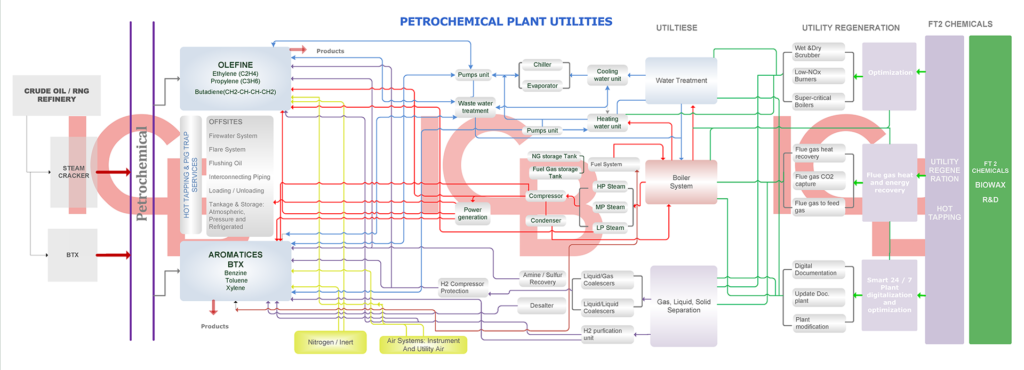
    • Process Flow Diagram
  • Feasibility study

    • Technical feasibility
    • Commercial feasibility
  • Process detail engineerig

    • P&ID
    • Datasheets
    • Process design description
  • Process design package

Software in use:

  • IPSEpro Software

  • PinCH Software

  • Aioflo software

  • Aspenplus in cooperation with TU Wien

  • AutoCAD

P&IDs and Process Flow Diagrams


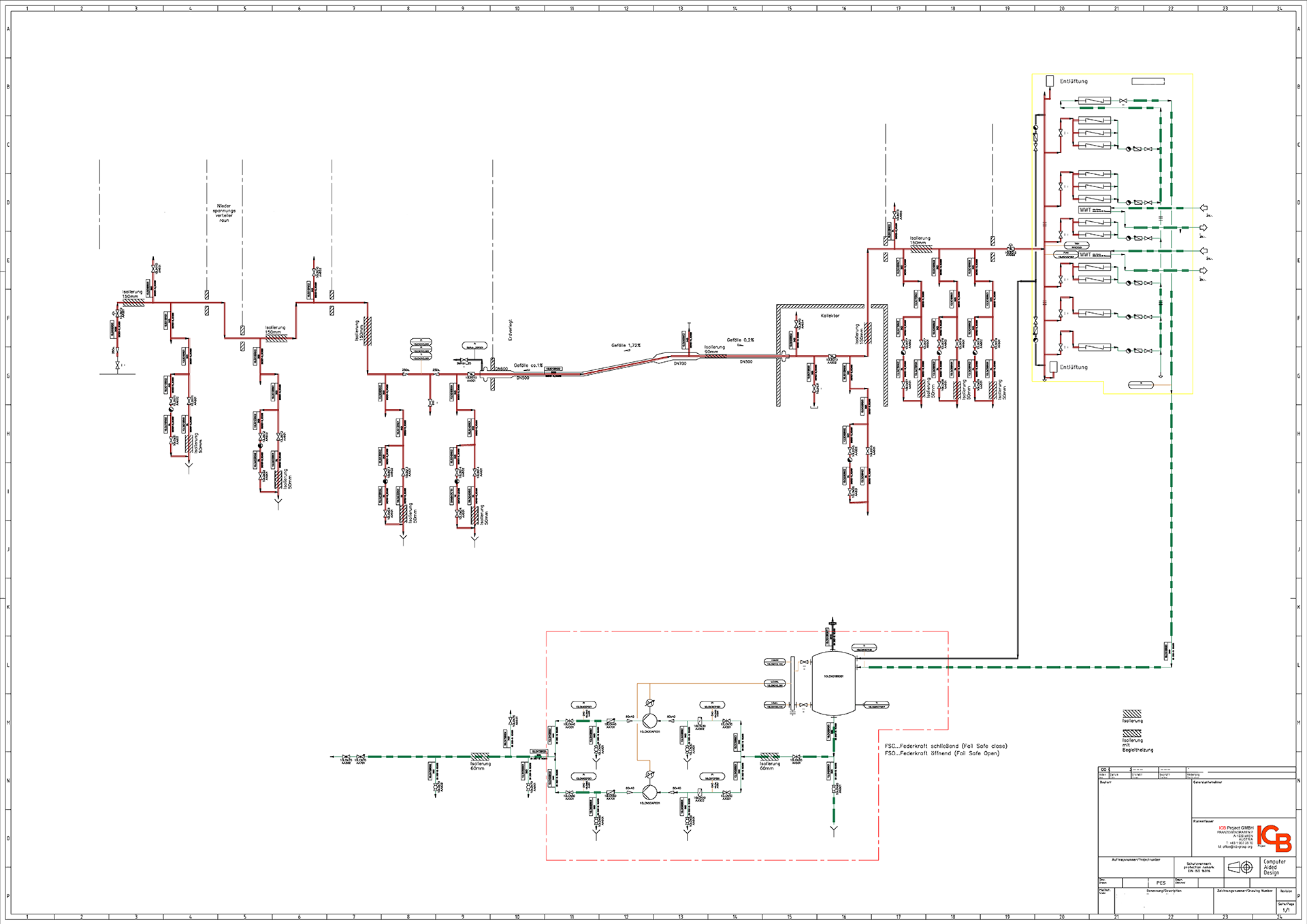
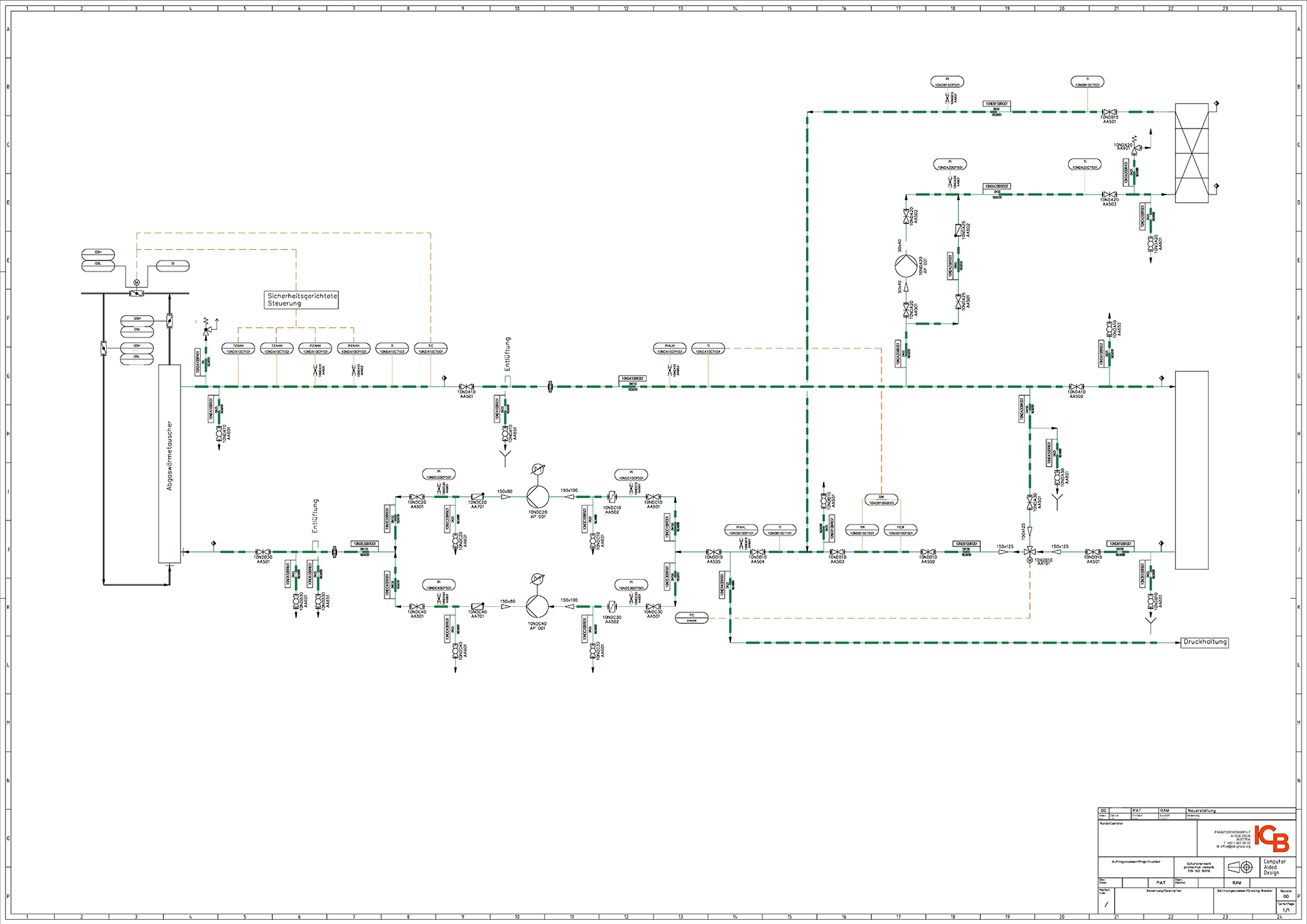
Piping and Instrumentation Diagrams (P&IDs) are the centerpiece of successful plant design in the field of process engineering. These detailed graphical representations not only provide a visual overview of industrial processes but also serve as an indispensable tool for the control, monitoring, and optimization of facilities.

P&IDs are detailed diagrams that map out all pipelines, instruments, and control elements of a facility. These flowcharts offer a comprehensive depiction of the process structure, considering both the physical layout of pipelines and the integration of sensors, valves, pumps, and other components. By clearly labeling process fluids, instruments, and controls, P&IDs facilitate precise communication among various teams involved in the planning, construction, and operation of the facility.


Usage of P&IDs in Plant Engineering:


  • Precise Process Visualization: P&IDs provide a detailed visual representation of the processes, offering clarity and accuracy in understanding the overall system.
  • Efficient Planning and Implementation: They contribute to efficient planning and execution of projects, helping in the systematic design and construction of industrial facilities.
  • Clearly Structured Plant Overview: P&IDs offer a clear and structured overview of the plant layout, enabling easy comprehension of the relationships between different components.
  • Seamless Integration of Components: These diagrams facilitate the seamless integration of various components, including pipelines, instruments, and control systems, ensuring a well-coordinated and functional plant.
  • Controlled Monitoring and Operation: P&IDs play a crucial role in the controlled monitoring and operation of the plant, aiding operators in understanding the flow of materials and the functioning of equipment.
  • Transparent Communication Between Teams: The diagrams enable transparent communication between different teams involved in the project, fostering collaboration and understanding among engineers, designers, and operators.
  • Increased Operational Efficiency and Maintenance Friendliness: By providing a comprehensive view of the plant, P&IDs contribute to increased operational efficiency and ease of maintenance, helping in quick identification and resolution of issues.
  • Foundation for Future Process Optimizations: P&IDs serve as a foundational tool for future process optimizations, allowing for continuous improvement and adaptation to changing operational requirements.

Carbon Dioxide Capture and Utilization


“Carbon Dioxide Capture and Utilization” (CCU) and “Carbon Dioxide Capture and Conversion” (CCC) are approaches aimed at reducing CO2 emissions by capturing carbon dioxide (CO2) and utilizing or converting it into other products. These technologies play a crucial role in efforts to mitigate anthropogenic CO2 emissions and address climate change.

CO2 Capture and Utilization (CCU):


CCU refers to the process of capturing CO2 from industrial processes or directly from the atmosphere, followed by using this CO2 to manufacture useful products.


CCU and CCC technologies contribute to viewing CO2 as a resource rather than merely considering it as a waste product. Ongoing research and development in this field aim to enhance these technologies and broaden their applications. ICB is focused on the application of CCC technology, which we will briefly introduce to you as follows:


CO2 Capture and Conversion (CCC):


CO2 Capture and Conversion focus on transforming captured CO2 into other chemical compounds or forms of energy. This process can occur through various methods, including chemical reactions or electrochemical conversions. Some examples of CO2 Capture and Conversion are:


  • Electrolysis: Electrolysis can convert CO2 into valuable products such as hydrocarbons or carbon monoxide, utilizing renewable energy sources like solar or wind energy.
  • Chemical Catalysis: Chemical catalysts can be employed to convert CO2 into various products, ranging from fuels to chemicals.
  • Carbon-Based Fuels: CO2 can serve as a raw material for the production of carbon-based fuels such as synthetic fuel or methane.
  • Chemicals and Materials: CO2 can be used as a feedstock for the production of chemical compounds and materials like polycarbonates, polyols, and methanol.
  • Construction Industry: CO2 can be utilized in the construction industry as a raw material for the production of carbonated materials like carbonated cement or carbonate stone.
  • Agriculture: CO2 can be utilized in agriculture for greenhouse applications or to enhance plant growth.


Technologies in focus:

Amine Solvent Technology

The Amine Solvent Technology is employed in the field of CO2 capture to remove carbon dioxide from industrial processes or exhaust gases. In this technology, a solvent based on amines, often Monoethanolamine (MEA) or other amines, is used to selectively absorb CO2 from gas streams. The process takes place in an absorption unit where the gas flows through the amine solvent. The amine molecules react with the CO2, forming stable compounds. Subsequently, the loaded solvent is directed to a desorption unit where the CO2 is released again by increasing the temperature or reducing the pressure. This cycle allows for continuous separation of CO2 from gas streams. The Amine Solvent Technology plays a crucial role in reducing greenhouse gas emissions in industrial processes and improving environmental sustainability.

Pressure Swing Adsorption (PSA) - Technology

The Pressure Swing Adsorption (PSA) technology is employed in the field of CO2 capture to efficiently and selectively remove carbon dioxide from gas mixtures. In this process, the gas mixture is passed through an adsorption unit under elevated pressure, which is filled with a specialized adsorbent. The adsorbent selectively binds CO2, temporarily retaining other gas components. After a specific period, the pressure in the system is reduced, relieving the adsorbent and releasing the captured CO2. This cyclic shift between pressure increase and reduction enables continuous CO2 separation. PSA technology is characterized by its flexibility and adaptability, making it attractive for various applications, including the reduction of CO2 emissions in industrial processes. Continuous advancements in this technology aim to enhance its efficiency, positioning it as a significant component in the pursuit of more sustainable environmental impacts.

Temperature Swing Adsorption (TSA) - Technology

The Temperature Swing Adsorption (TSA) technology has emerged as a significant method in CO2 capture, especially in industrial processes. This advanced technology utilizes temperature fluctuations to efficiently separate carbon dioxide from gas mixtures. In a TSA system, the gas mixture passes through an adsorber filled with a suitable adsorbent. The adsorbent captures CO2 at low temperatures. Subsequently, the temperature is increased, releasing and regenerating the adsorbent. The cyclic transition between adsorption and regeneration allows for continuous CO2 separation. TSA technology offers the advantage of thermal regeneration, making it particularly effective and energy-efficient. This advanced method plays a crucial role in efforts to reduce CO2 emissions and has the potential to make a sustainable contribution to combating climate change.

Membrane Technology

Membrane Technology has emerged as a promising approach in CO2 capture, particularly in the context of gas processing and separation. In this process, semi-permeable membranes are utilized to selectively separate CO2 from gas mixtures. The membranes allow CO2 to pass through while retaining other gas components. This process offers the advantages of simplicity, cost-effectiveness, and a compact plant design. There are various types of membranes, including polymeric, ceramic, or metal-organic membranes, each with its own specific properties. Membrane technology is well-suited for applications with low CO2 concentrations, often found in industrial exhaust gases. Its flexibility and scalability make it a promising option for CO2 capture, with ongoing research and innovation aimed at improving the efficiency and applicability of this technology.

Hazard and Operability (HAZOP): Precise Risk Analysis for Safe Process Operation


Hazard and Operability Analysis (HAZOP) is a critical tool in the field of process safety, holding a central position at [Company Name]. Our HAZOP risk analyses are designed to identify, assess, and minimize potential hazards in industrial plants, ensuring safe operation and efficient process management.


HAZOP is a systematic method for risk analysis that aims to identify potential hazards and operational issues in a process system. Our experienced engineers conduct HAZOP analyses by critically examining every aspect of a process, uncovering potential deviations from normal operation. This involves considering not only technical aspects but also operational, human, and organizational factors.

Our HAZOP risk analysis encompasses:


  • Identification of Hazards: Through a meticulous examination of all possible deviations from normal operation, potential sources of hazards are identified. This includes equipment malfunctions, human errors, or external influences.
  • Risk Assessment: Each identified hazard is assessed based on its potential impact on the process and its likelihood. This allows for prioritizing risks and the targeted development of safety measures.
  • Development of Safety Measures: Based on the HAZOP results, preventive and reactive measures are developed to minimize or control potential risks. This may involve implementing new technologies, providing staff training, or making changes to operating procedures.
  • Documentation and Training: All results of the HAZOP risk analysis are thoroughly documented to serve as a foundation for future decision-making and training. This ensures that the entire team is informed about potential hazards and the corresponding safety measures.

Thermodynamic Simulation through Software: Efficient Process Optimization and Product Development


Thermodynamic simulation using specialized software is an essential component of modern engineering practices. At [Company Name], we leverage advanced simulation tools to analyze, comprehend, and optimize complex thermodynamic processes. This simulation software enables precise predictions and detailed insights into the behavior of liquids, gases, and solids in various industrial applications.

Benefits of Thermodynamic Simulation at ICB:


  • Accuracy and Reliability: Our simulation software utilizes advanced thermodynamic models and algorithms to deliver precise and reliable results.
  • Cost Efficiency: Virtual analysis of processes reduces expensive experiments and prototypes, leading to significant cost savings.
  • Speed and Flexibility: Simulations can be conducted quickly and easily adjusted to test various scenarios, enhancing flexibility in process development.
  • Customized Solutions: Tailored simulation solutions are offered to meet the specific requirements and goals of our clients.
  • Efficient Process Optimization: Simulation allows engineers to virtually explore different scenarios and operating conditions to determine the optimal operating state. This results in improved process efficiencies, higher product quality, and reduced production costs.
  • Product Development and Design: In the chemical, pharmaceutical, and energy industries, simulation enables the evaluation of designs before costly prototypes are created, accelerating the innovation process and minimizing risks.
  • Environmental and Energy Efficiency: The software enables the analysis of energy consumption and identifies opportunities to improve energy efficiency, contributing to the sustainable design of processes and minimizing environmental impact.
  • Phase Equilibrium and Substance Databases: Through the integration of accurate substance databases, the software can calculate precise phase equilibria and substance properties, crucial for accurately modeling complex thermodynamic systems.
  • Safety Analyses: Simulation allows for the assessment of safety aspects by identifying and evaluating potential hazard situations. This supports the development of safer processes and facilities.

error: © icb-group